

The Lok Sabha has passed a bill that authorises the Central Government to allow banks to levy charges on Unified Payments Interface (UPI) transactions. The move could mark a major shift in India’s digital payment ecosystem if the government decides to implement such charges.
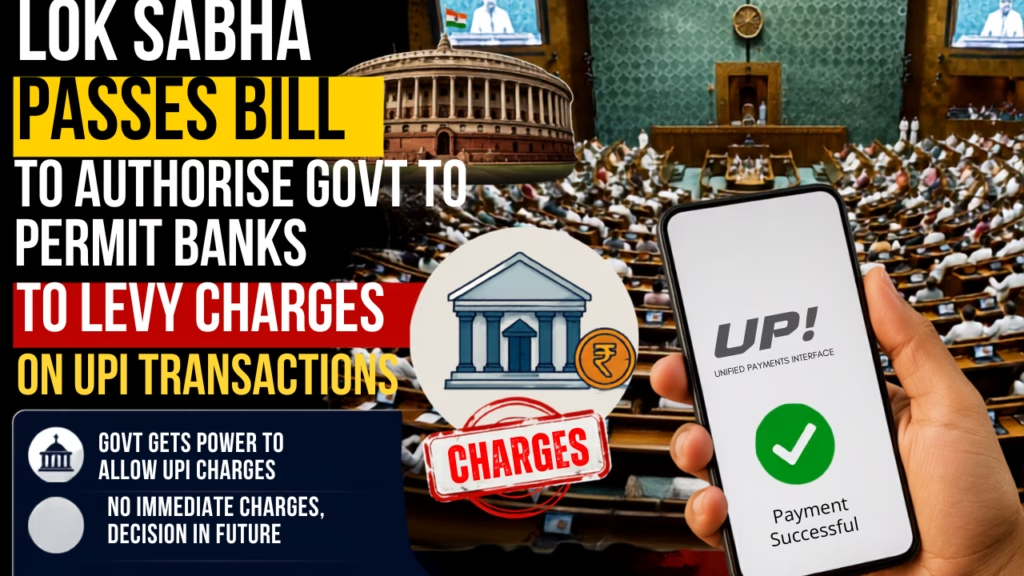
The bill does not immediately impose UPI charges. Instead, it gives the government the legal authority to permit banks to introduce fees under specified conditions.
 What Does the Bill Say?
Under the new legislation, the government can authorise banks and payment service providers to levy charges on selected UPI transactions.
Officials say the provision aims to ensure the long-term sustainability of India’s digital payments infrastructure while giving policymakers flexibility to respond to future financial needs.
Will UPI Become Chargeable?
For now, UPI transactions remain free for users.
The bill only creates a legal framework that allows the government to approve charges in the future. Any decision on fees will require separate government notification and guidelines.
Why Is This Bill Important?
India processes billions of UPI transactions every month. Banks and payment service providers have long argued that maintaining the digital payment network involves significant operational costs.
Supporters believe the new law could help strengthen digital payment infrastructure by providing a mechanism to recover some of these costs if required.
Concerns Raised
Some opposition members and consumer groups expressed concern that introducing charges could discourage digital payments, especially among small merchants and rural users.
They urged the government to protect the affordability of UPI, which has become one of India’s most popular payment systems.
What Happens Next?
The bill will now move to the Rajya Sabha for consideration. If approved and receives the President’s assent, the government will have the authority to notify rules regarding UPI transaction charges.
Until then, UPI payments will continue as usual, with no immediate change for users.
Conclusion
The passage of the bill in the Lok Sabha is a significant step in shaping the future of India’s digital payment system. While it does not introduce charges immediately, it empowers the government to allow banks to levy UPI transaction fees if considered necessary in the future.
