

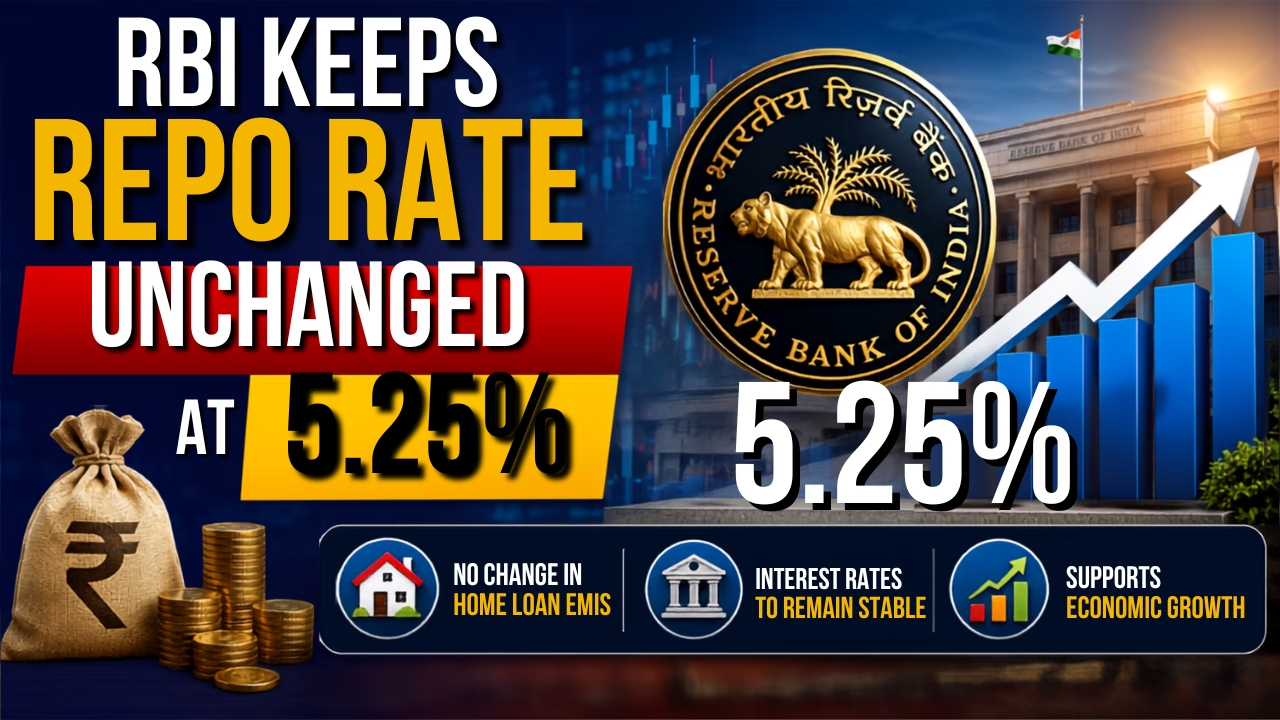
The Reserve Bank of India (RBI) has decided to keep the repo rate unchanged at 5.25%. The decision was announced after the latest Monetary Policy Committee (MPC) meeting. As a result, home loan borrowers and businesses will not see any immediate change in borrowing costs.
The RBI said the move aims to maintain price stability while supporting economic growth. At the same time, the central bank will continue to monitor inflation and global economic conditions.
What Is the Repo Rate?
The repo rate is the interest rate at which the RBI lends money to commercial banks.
When the repo rate increases, loans usually become more expensive. However, when the repo rate falls, borrowing becomes cheaper. Since the RBI has kept the repo rate at 5.25%, most loan interest rates are expected to remain stable.
Why Did RBI Keep the Repo Rate Unchanged?
The RBI considered several important factors before taking this decision.
Inflation remains under control.
India’s economy continues to grow steadily.
Global financial uncertainty still exists.
Stable interest rates support both consumers and businesses.
Therefore, the central bank decided not to change the policy rate.
What Does It Mean for Home Loan Borrowers?
The latest RBI decision is good news for borrowers.
People with floating-rate home loans are unlikely to see any immediate change in their monthly EMIs. Similarly, banks are expected to keep lending rates stable unless they make separate revisions.
As a result, borrowers can continue their repayment plans without worrying about higher monthly installments.
Impact on Businesses
Businesses also benefit from stable interest rates.
Companies planning expansion or new investments can continue borrowing at current rates. Moreover, predictable borrowing costs help businesses make better financial decisions.
Therefore, the RBI’s decision brings confidence to the market.
What Should Borrowers Do?
Borrowers should continue monitoring interest rates offered by different banks.
If better loan offers become available, they can consider refinancing. However, there is no urgent need to change existing loan plans because interest rates remain unchanged.
What Happens Next?
The RBI will closely watch inflation, crude oil prices, global markets and domestic economic growth.
If inflation stays within the target range, the central bank may review its policy in future MPC meetings. Until then, interest rates are expected to remain stable.
Conclusion
The RBI has kept the repo rate unchanged at 5.25%, providing relief to borrowers and businesses. The decision supports economic stability while allowing the central bank to monitor inflation carefully. For now, home loan EMIs and most lending rates are expected to remain unchanged.
