

Traffic congestion has become one of the biggest challenges for people living in Greater Noida West. Every day, thousands of commuters face long traffic jams while traveling between Shahberi, Crossings Republik, and NH-9. To solve this problem, the Uttar Pradesh government has announced an ambitious infrastructure project—the state’s first double-decker elevated road.
The proposed project will not only reduce travel time but also improve connectivity between Greater Noida West and Delhi-NCR. With an estimated cost of ₹900 crore, this modern road project is expected to transform daily commuting for lakhs of residents. 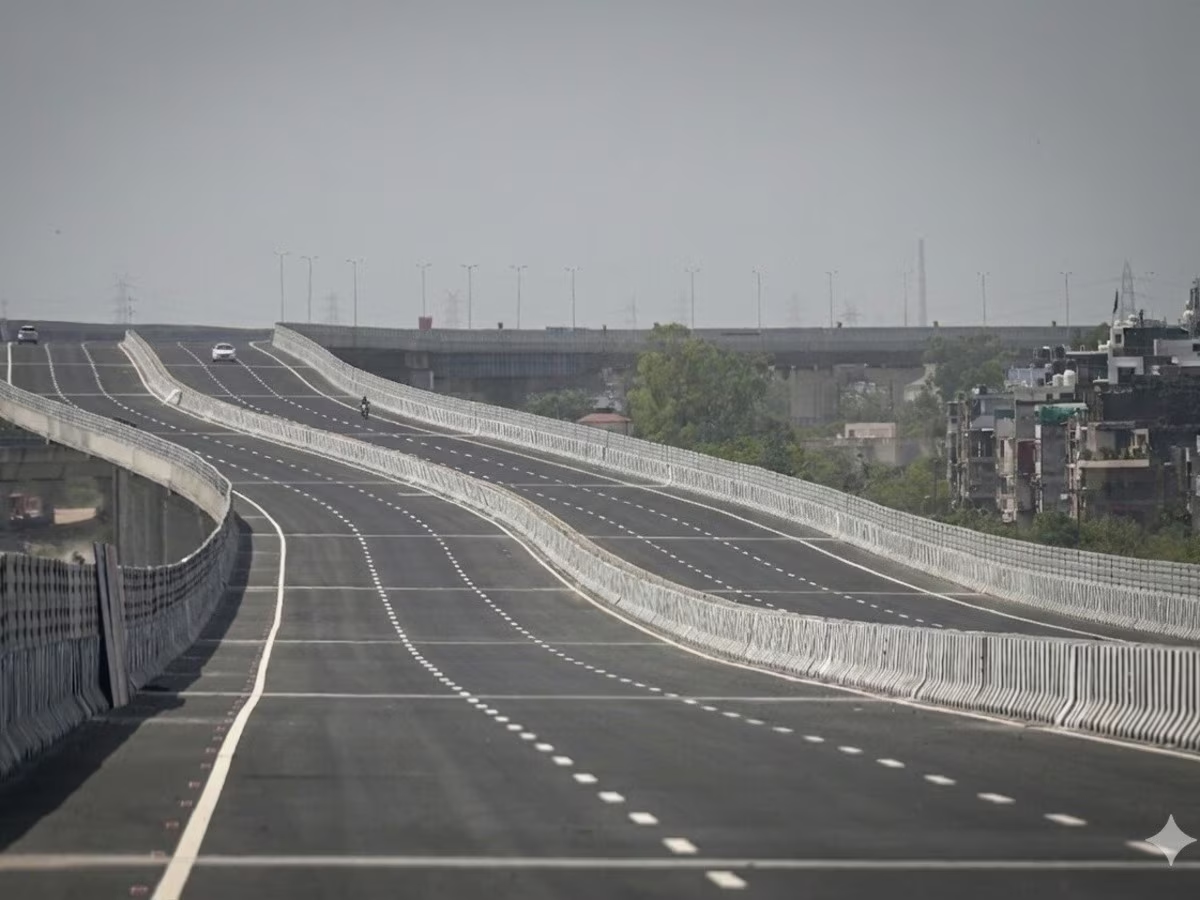
Uttar Pradesh’s First Double-Decker Elevated Road
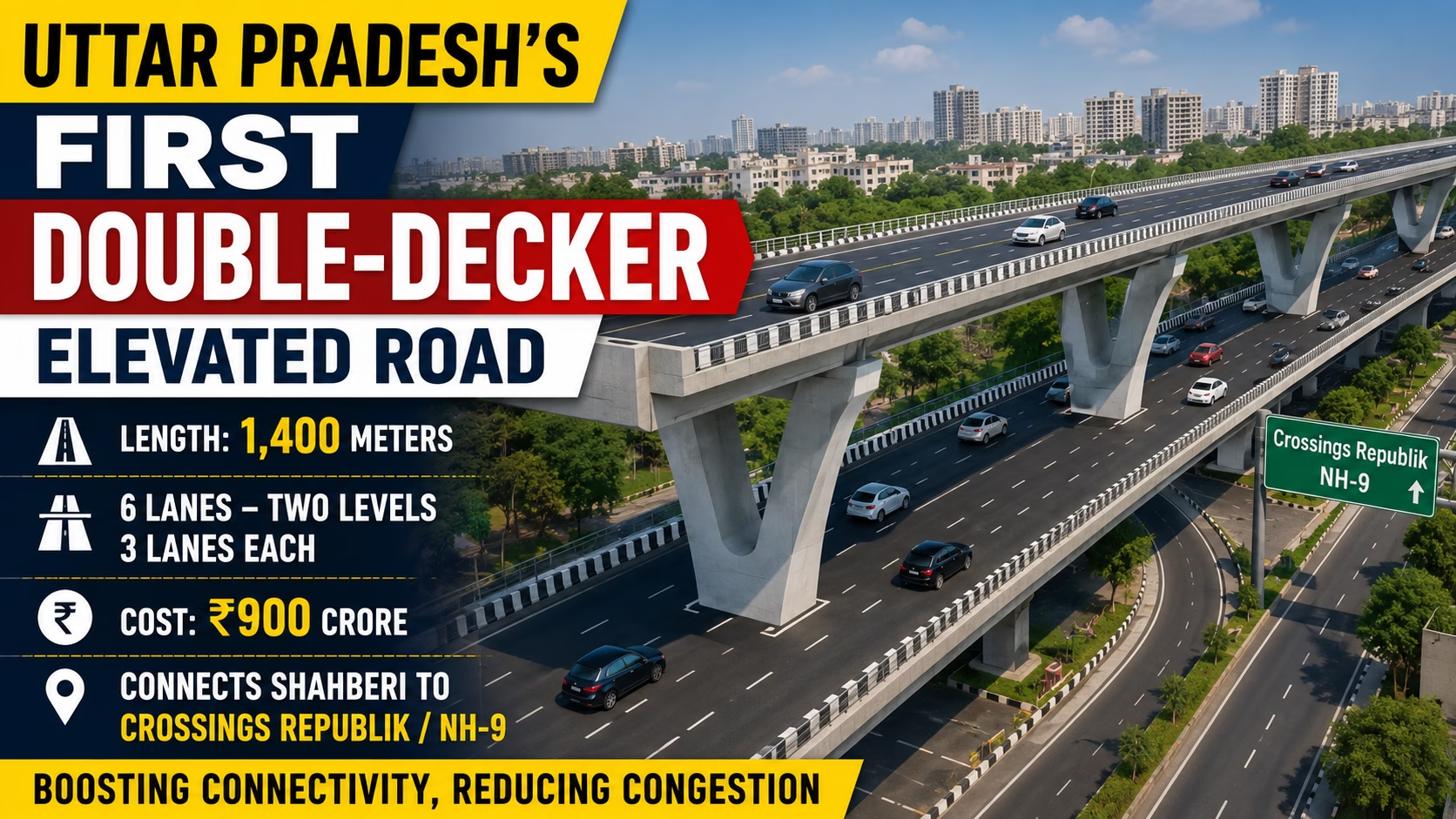
The new elevated road will be built in Shahberi, Greater Noida West. It will stretch approximately 1.4 kilometers (1,400 meters) and feature a unique double-decker structure with two separate levels.
Each level will have three lanes, making it a six-lane one-way corridor. The elevated road will connect the 130-meter road in Greater Noida West directly to Crossings Republik and National Highway-9 (NH-9).
This connection is expected to ease heavy traffic and offer faster access to Delhi, Ghaziabad, and nearby areas.
Why Was the Original Flyover Plan Changed?
Initially, authorities planned to build a four-lane single-deck flyover. However, engineers faced a major challenge during the planning stage.
The original design required 15 meters of road width, but only 14 meters of space is available in Shahberi. This limitation made the standard flyover impossible to construct without significant land acquisition.
Instead of delaying the project, planners introduced a more practical solution.
A Smart Double-Decker Design
To overcome the space issue, authorities selected a double-decker elevated road supported by U-shaped pillars.
This innovative design requires only 12 meters of width, making it suitable for the narrow corridor available in Shahberi.
The new structure allows maximum use of limited space while maintaining smooth traffic movement on both levels.
Project Highlights
Here are the major features of the proposed project:
Project Name: Uttar Pradesh’s First Double-Decker Elevated Road
Location: Shahberi, Greater Noida West
Length: Approximately 1,400 meters
Estimated Cost: ₹900 crore
Structure: Two levels with three lanes each
Total Capacity: Six one-way lanes
Connectivity: 130-meter road to Crossings Republik and NH-9
Design: U-shaped pillar construction requiring only 12 meters of width
How Will It Benefit Commuters?
The project is expected to provide several long-term benefits.
1. Reduced Traffic Congestion
Shahberi and Greater Noida West experience severe traffic during peak hours. The elevated road will divert a large portion of vehicles away from busy surface roads.
2. Faster Travel Time
Commuters traveling toward NH-9, Ghaziabad, and Delhi will enjoy a quicker and smoother journey with fewer traffic signals and bottlenecks.
3. Better Connectivity
The direct connection between Greater Noida West and Crossings Republik will improve access to residential areas, business centers, and highways.
4. Fuel Savings
Less time spent in traffic means lower fuel consumption, helping commuters save money over time.
5. Economic Growth
Improved infrastructure often attracts new businesses, boosts property demand, and supports overall regional development.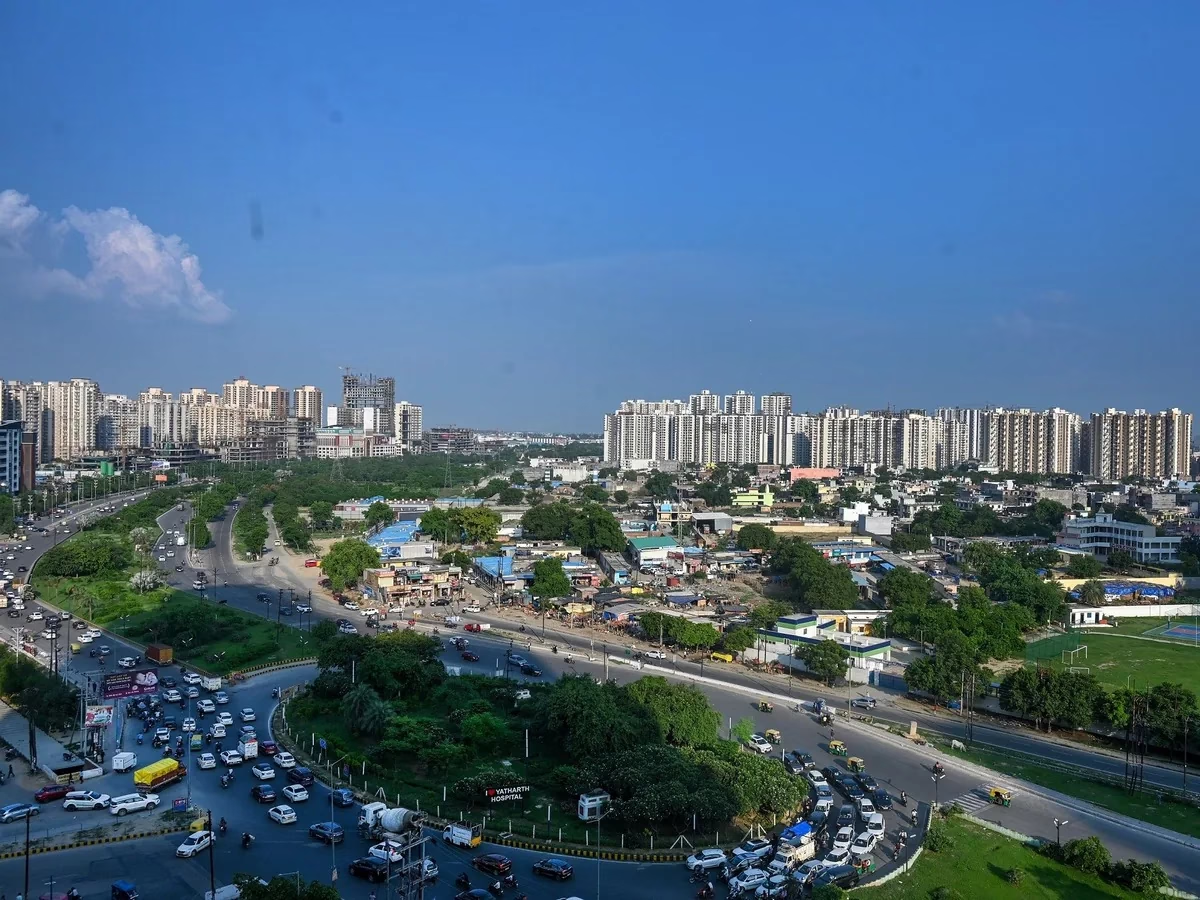
Why Is This Project Important?
Greater Noida West has witnessed rapid residential growth over the past decade. Thousands of families have moved into new housing societies, increasing the number of daily commuters.
However, road infrastructure has struggled to keep pace with this expansion. Traffic congestion has become a daily concern, especially near Shahberi and Crossings Republik.
The double-decker elevated road aims to address these issues by increasing road capacity without requiring large-scale land acquisition.
Engineering Innovation
One of the most impressive aspects of the project is its engineering design.
Instead of widening existing roads, engineers have chosen a vertical approach by building two traffic levels.
The use of U-shaped support pillars allows the structure to fit within the available road width while maintaining stability and safety.
This design is commonly used in densely populated urban areas where land is limited.
Impact on Daily Life
Once completed, residents of Greater Noida West can expect:
Shorter office commutes
Improved connectivity to Delhi
Easier access to NH-9
Less traffic during peak hours
Better travel experience for public and private vehicles
Businesses operating in the region may also benefit from improved transportation and easier movement of goods and services.
Construction Challenges
Although the project promises significant benefits, construction may temporarily affect traffic in the Shahberi area.
Authorities are expected to implement traffic management plans to minimize inconvenience during the construction phase.
Commuters may experience temporary diversions and slower traffic until the project is completed.
A Step Toward Modern Infrastructure
The proposed double-decker elevated road reflects Uttar Pradesh’s focus on modern urban infrastructure.
With increasing urbanization across the National Capital Region (NCR), projects like this are becoming essential for managing growing traffic demand.
If completed successfully, the Shahberi project could become a model for similar infrastructure developments in other cities across the state.
Conclusion
The planned double-decker elevated road in Shahberi marks a significant milestone for Uttar Pradesh’s transport infrastructure. By combining innovative engineering with efficient land use, the project aims to solve one of Greater Noida West’s biggest traffic challenges.
The ₹900-crore, 1.4-kilometer elevated corridor is expected to reduce congestion, improve connectivity, and make daily travel faster and more convenient for thousands of commuters.
