

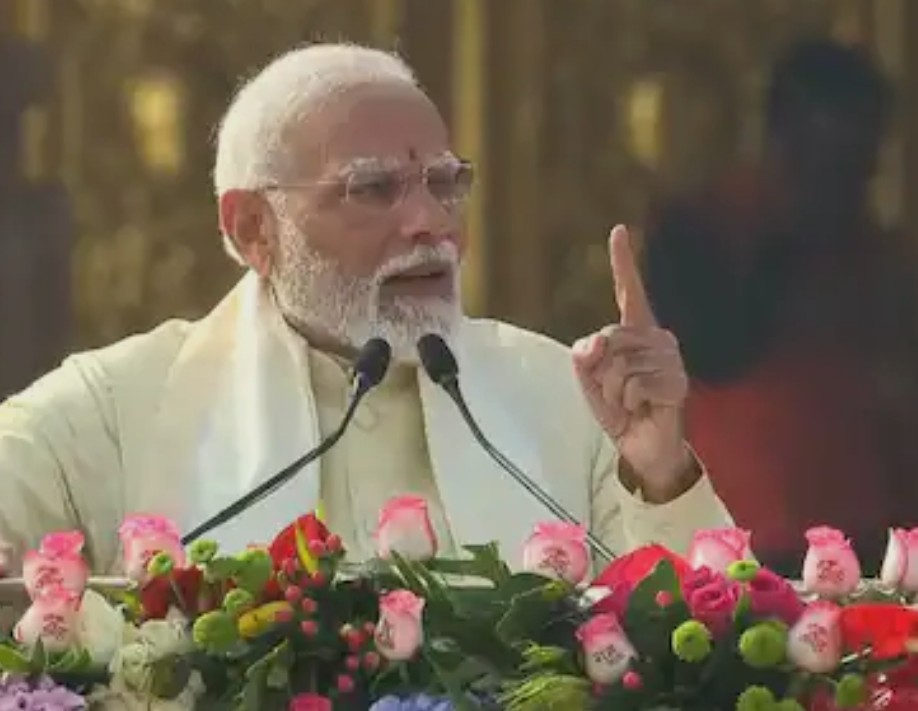
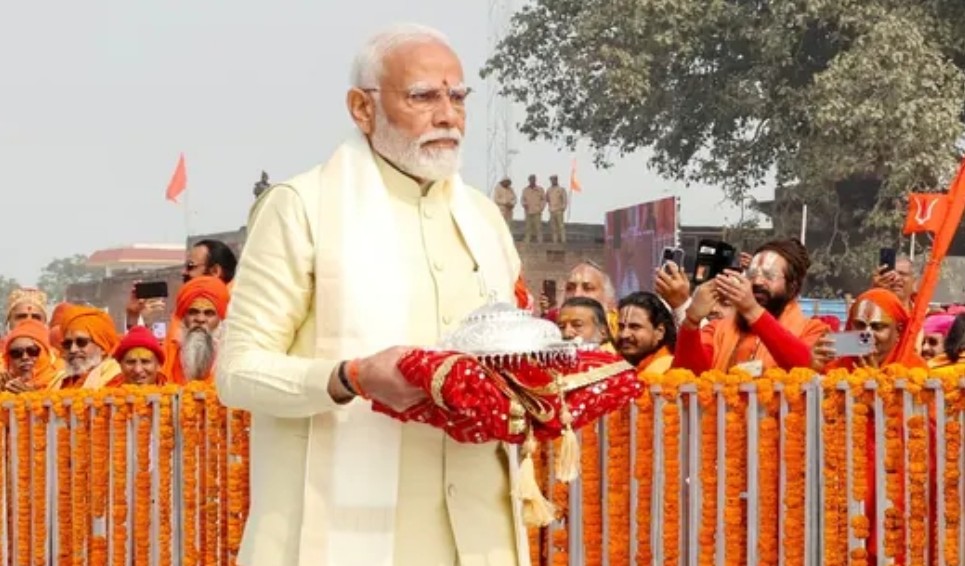
On 25 November 2025, PM Narendra Modi hoisted a saffron flag at the spire of the Ram Janmabhoomi Mandir in Ayodhya.
PM Modi says the flag conveys “dignity, unity and cultural continuity,”and embodies the ideals of Ram Rajya.
The ceremony was held in an auspicious muhurat, giving it deep religious resonance. According to temple priests, this “Dhwajarohan“ is akin to a spiritual activation of the entire temple structure-distinct from the earlier “pran pratishtha” of the idol in January 2024.
PM Modi said the “wounds and pain” of centuries are healing as a 500-year-old resolve is finally being fulfilled after the formal completion of the Ram Janmabhoomi Mandir. He urged people that if India is to become a developed nation by 2047, “we must awaken the Ram within ourselves.”
Modi also said the sacred flag would stand as a testament that “truth ultimately triumphs over falsehood,”and congratulated Ram ‘bhakts’ along with all those who contributed to the construction of the temple.
Potential Implications and Critiques
• National Unity vs Polarization
While PM Modi frames the flag as a symbol of unity and cultural continuity, critics may see the ceremony as reinforcing a Hindu-majoritarian identity. The association of the state with a deeply religious act raises questions about secularism.
• Political legacy
For Modi, this may be a legacy-defining moment. The combination of religion and state optics can help in consolidating his ideological project.
• International Perception
The rebuilding and symbolic events might affect how India is perceived globally as embracing its cultural roots, but also raising concerns about religious nationalism.
• Religious Significance
From a theological perspective, the act may be interpreted as completing the spiritual structure, not just the physical one.
