


ISRO Opens 2026 With PSLV-C62 Launch
The Indian Space Research Organisation (ISRO) started its 2026 mission calendar on Monday with the launch of the PSLV-C62 rocket. The mission carried the Earth Observation Satellite EOS-N1, also called Anvesha, along with 14 other small satellites. This launch highlighted ISRO’s continued focus on scientific research and commercial space services.
PSLV-C62 Lifts Off From Sriharikota
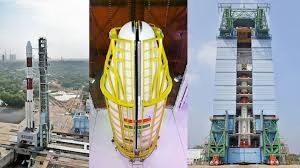
PSLV-C62 lifted off from the First Launch Pad at the Satish Dhawan Space Centre at around 10:30 am. The 44.4-metre-tall rocket followed its planned countdown and rose smoothly in the initial phase. PSLV once again showed why it remains ISRO’s most dependable launch vehicle.
Mission Payload and Commercial Role
The mission carried EOS-N1 (Anvesha) as the main payload. The satellite aims to strengthen India’s Earth observation and monitoring capabilities. Along with it, 14 co-passenger satellites flew for Indian and foreign customers. NewSpace India Ltd managed the mission under a commercial launch contract, reinforcing India’s growing role in the global space market.
Planned Orbit and Flight Timeline
The rocket aimed to deploy all satellites into a Sun-Synchronous Orbit at an altitude of nearly 511 km. Mission planners expected satellite separation about 17 minutes after liftoff. Such an orbit supports Earth imaging and environmental monitoring missions by ensuring consistent lighting conditions.
Disturbance Reported in Third Stage
Soon after launch, ISRO detected a disturbance during the third stage of the flight. ISRO Chairman V Narayanan confirmed that the rocket deviated from its intended trajectory. Engineers quickly began examining the data to identify the cause. ISRO stated that the mission faced an anomaly and that a detailed analysis is now underway.
Fourth Stage and De-Boost Plan
According to the mission plan, engineers intended to restart the fourth stage after satellite separation. This restart would lower the orbit and guide the stage toward re-entry. The plan also included the release of the Kestrel Initial Technology Demonstrator (KID) capsule. Both the PS4 stage and the capsule were expected to splash down in the South Pacific Ocean.
Recent Success Before 2026 Launch
Just weeks earlier, ISRO successfully launched the BlueBird Block-2 communication satellite for AST SpaceMobile. That mission ended with a smooth deployment and positive results. As ISRO moves forward in 2026, the findings from the PSLV-C62 investigation will help improve future missions and maintain launch reliability.
Follow for more updates, FM News.
