

A socio-economic and educational survey (often called the caste survey) has been launched by the government of Karnataka via the Karnataka State Backward Classes Commission to collect data on caste, social and educational status across communities.
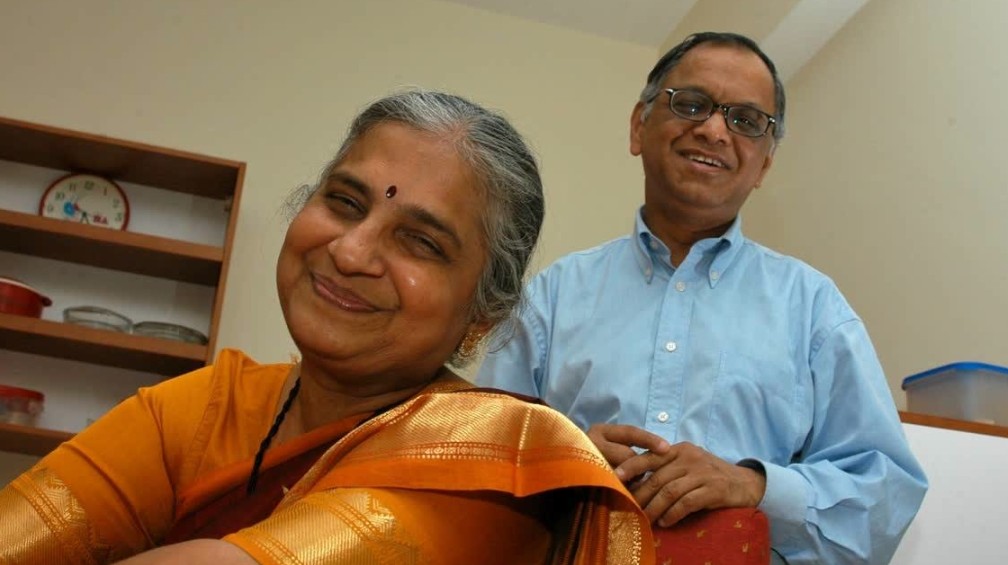
When surveyors visited the residence of N.R. Narayan Murthy, the founder of Infosys, he and his wife Sudha Murthy denied to participate in the survey by stating that they do not belong to any backward community, and opted out of this survey through a self – declaration form. They also mentioned that their participation would not be useful for the government.
However, the Murthy couple’s action has multiple symbolic as well as structural implications :
On Legitimacy Of The Survey
When high profile, respected figures choose to opt out, it raises several questions in the public debate, i.e., is the survey perceived as fair, neutral or beneficial? If elites decline, some may see surveys as “for others”, not universal.
On Social Stratification and Caste Visibility
The survey aims to document inequities by caste. If those people who are socially and economically privileged refuse to provide data, then that may reinforce the idea that caste is relevant for disadvantaged people only. Besides, it may also reduce visibility of intra – elite inequalities, if present.
On The Question Of Voluntariness
The law tends to make participation voluntary. The decision also highlights tension, i.e., voluntary policy vs social pressure. However, there is always a symbolic power in opting out, especially for people with visibility.
The decision of Murthy’s couple to opt out of the survey also raises critical questions which are mentioned below :
Does Caste Survey Reinforce Or Challenge Caste?
It can be argued that recognising caste through state mechanisms helps in redressing inequalities or further entrenches caste identities. The Murthy’s refusal touches this : refusal can be seen either as a resisting categorisation, or conversely, as an avoiding accountability.
Autonomy VS Collective Obligation
To what extent do citizens, particularly privileged ones, have a moral or social obligation to contribute to surveys that serve collective welfare?
Power Relations And “Who Gets Counted?”
Data is power. Who is counted or chooses to be counted matters. The ones who are counted can appear, and be targeted for policy. On the contrary, non – participation by elites can shift moral burden onto those who participate in surveys.
Intersection Of Caste, Class And Visibility
The denial by Murthy’s couple to participate in the caste survey of Karnataka also illustrates how economic and social privilege interacts with caste. Moreover, their visibility means their choices are statements in themselves.
The decision of Narayan Murthy and Sudha Murthy is significant as it reveals tensions in how caste, identity and data intersect in India today. On the one hand, their refusal tends to weaken the overall comprehensiveness of the survey, while on the other hand, it serves as a case study of how elites perceive caste as well as public visibility of caste.
