

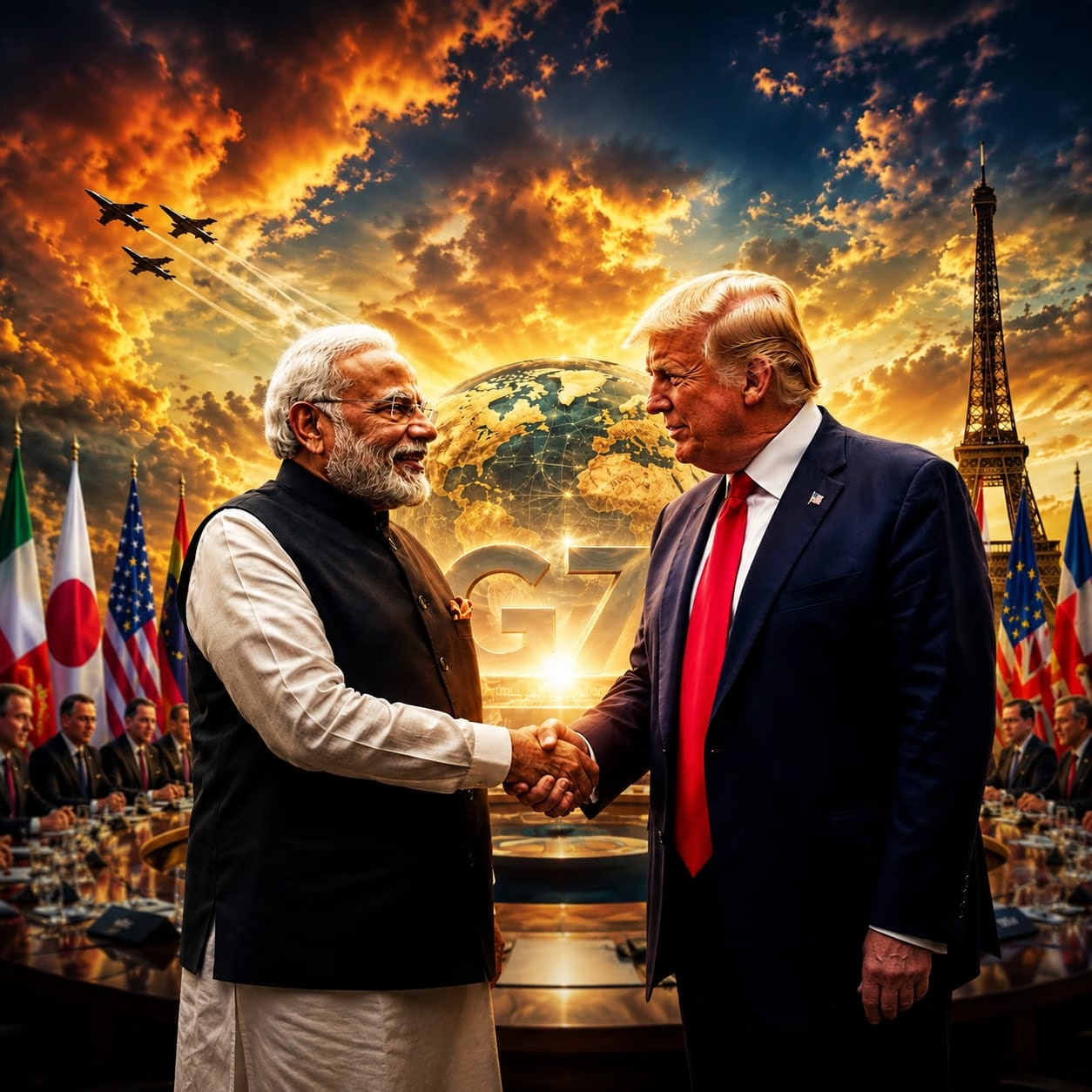
There’s something almost funny about how much attention a handshake can get. But that’s exactly what happened in France this week. Prime Minister Narendra Modi and Donald Trump greeted each other on the sidelines of the G7 Summit. Cameras caught it. The clip went everywhere within hours. By evening, it was basically all anyone in the diplomatic world wanted to talk about.
What the G7 actually is
Quick refresher, since not everyone keeps this stuff memorized. The G7 is a club of seven heavyweight economies: Canada, France, Germany, Italy, Japan, the UK, and the US. Once a year their leaders sit down together. They work through whatever’s on fire globally that year. Trade, security, climate you name it.
India isn’t technically part of that club. Never has been. But it shows up anyway, pretty much every year now. At this point, ignoring India at a summit like this would be a little absurd, given how fast its economy has grown. Modi’s become a regular fixture there. Almost expected at this point.
The handshake itself
So, the moment. Modi and Trump shook hands, smiled, said a few words the usual stuff. Easy to roll your eyes at, sure. It’s just a handshake. Except it isn’t, not really, not in this world. Diplomats read into these things constantly, and for good reason. A warm greeting between two leaders tends to say more than any official statement does.
This also wasn’t some first-time meeting. The two have crossed paths plenty of times before. From what’s been said publicly, they’ve generally gotten along. Trade talks, defense cooperation, education partnerships a lot of that has kept moving forward, thanks in part to whatever rapport exists between them.
Why this relationship even matters
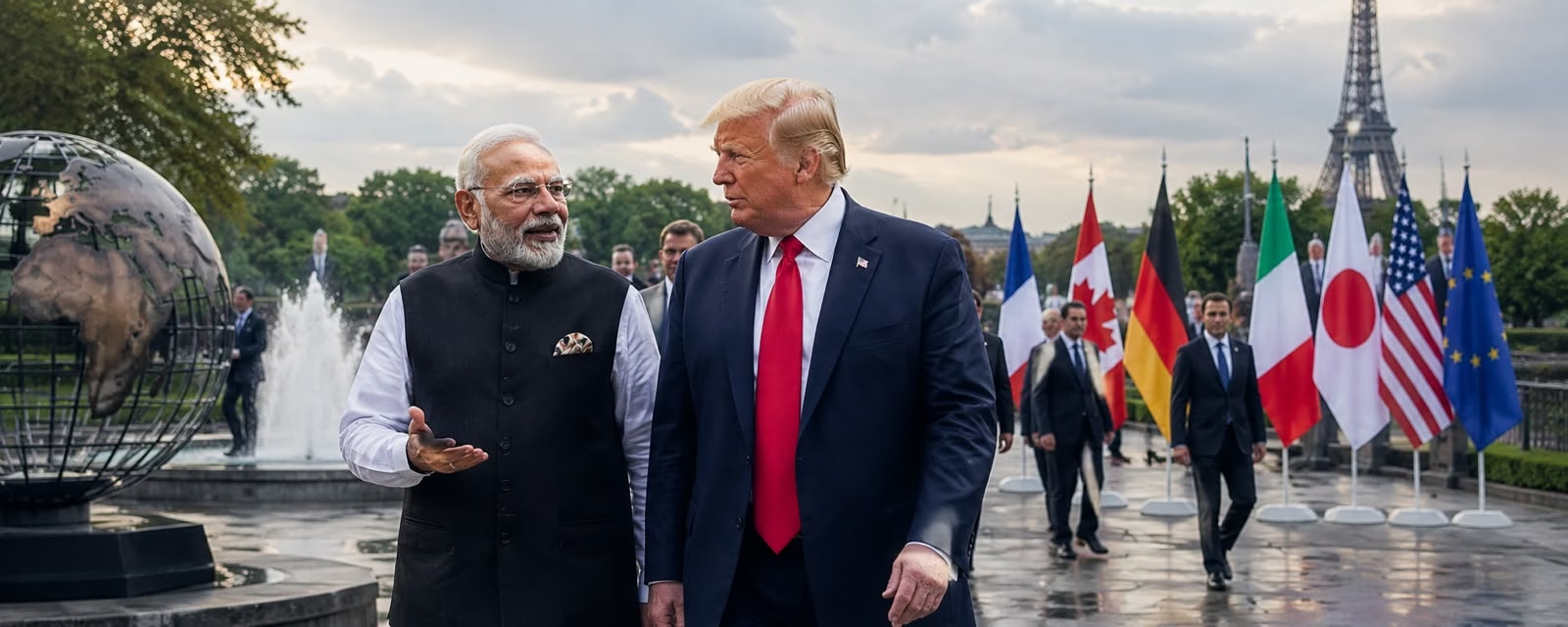 Here’s the thing about India and the US. This isn’t a new friendship, and it’s not a shallow one either. It’s been built up over years on shared interest trade, tech, security, the whole package. American money has flowed into India. Indian companies have planted roots in the US. Sectors like IT, healthcare, and clean energy have all benefited from that back-and-forth.
Defense is maybe the most underrated piece of it. Joint military drills happen regularly. The two countries coordinate closely on security, especially around the Indo-Pacific. It’s a region where having allies who actually talk to each other matters more than people realize.
Point being: the handshake wasn’t really about the handshake. It was a stand-in for everything underneath it.
What leaders actually discussed
Behind the photo-ops, there was real work happening too. Economic growth was front and center. Most countries are still chasing ways to keep jobs flowing and economies humming.
Climate got serious airtime as well. Conversations leaned toward cutting emissions and scaling up clean energy faster. It’s less of a side issue now and more of a “we have to deal with this” topic for most leaders.
Security came up too, obviously. Terrorism, regional conflicts the usual list of things no single country can fix alone. AI is increasingly creeping into these discussions as well. Governments are still figuring out how to regulate it without choking off innovation. That’s its own messy balancing act.
India isn’t just a guest anymore
It’s worth pausing on this. India’s seat at the table isn’t really a courtesy invite at this point. The country’s population size, economic momentum, and growing tech sector mean its voice carries more weight than it used to.
Modi’s leaned into that. He’s pushed India’s progress in digital infrastructure and renewable energy as proof the country deserves a louder say. And honestly, other nations seem to agree. That’s basically why India keeps getting invited back, summit after summit, even without formal membership.
How everyone reacted
Predictably, the handshake took over headlines for a day or two. Social media did its thing photos, clips, commentary from every angle. Supporters on both sides treated it as a feel-good signal. Things between the two countries, they figured, are in a good place.
Analysts pointed out something that gets repeated a lot in foreign policy circles. It happens to be true: personal chemistry between leaders genuinely smooths over harder conversations down the line. A handshake won’t write policy. But it sets a tone. And people watching journalists, officials, everyone has tend to notice that tone.
Zooming out
At some point you have to ask why any of this matters. Honestly, it’s because face-to-face diplomacy still does something emails and statements can’t. Small moments build trust. A handshake, a smile, a shared joke. That trust is what makes the bigger, harder negotiations possible later.
The Modi-Trump moment in France fits into that pattern. The summit covered plenty of heavy ground and growth, climate, security, tech policy. But somehow it was the simple image of two leaders shaking hands that traveled furthest. It’s the part that stuck around longest in people’s minds.
Maybe that’s the real takeaway here. The world is dealing with no shortage of complicated, slow-moving problems. Even so, the relationships between the people running countries still count for something. Even if it’s just a handshake.
