

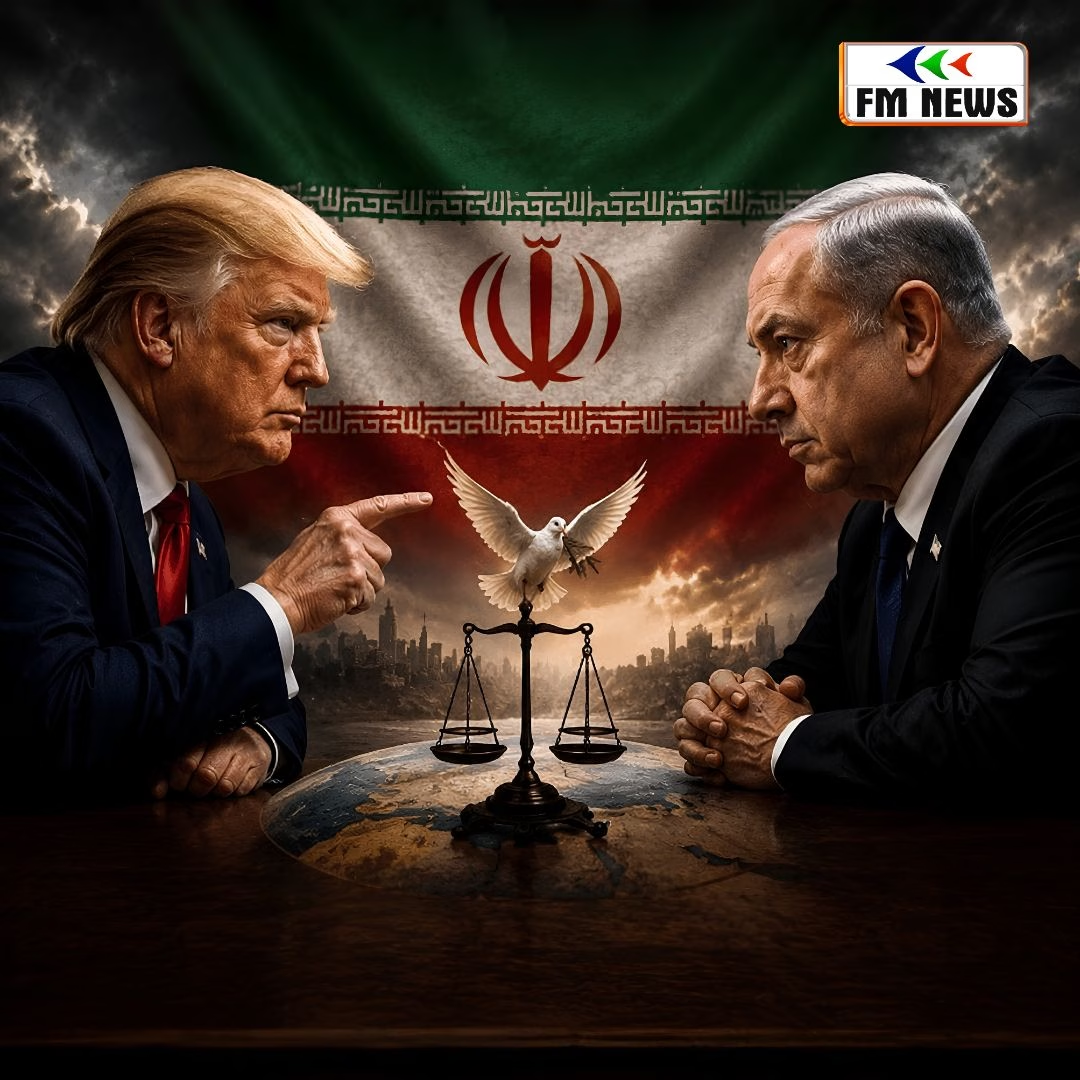
After days of confusion, officials finally read the full terms of the US-Iran memorandum of understanding to reporters. The details are big, complicated, and already controversial.
For days after President Trump announced a deal with Iran, nobody outside a tight circle of senior officials knew exactly what was in it. That changed Wednesday. The administration laid out the full terms, and Trump signed the document over dinner at the Palace of Versailles with French President Emmanuel Macron. Iran’s President Masoud Pezeshkian signed separately. He posted a photo of himself holding the document up and called it “a historic document and a message from a strong Iran.”
So what’s actually in this thing?
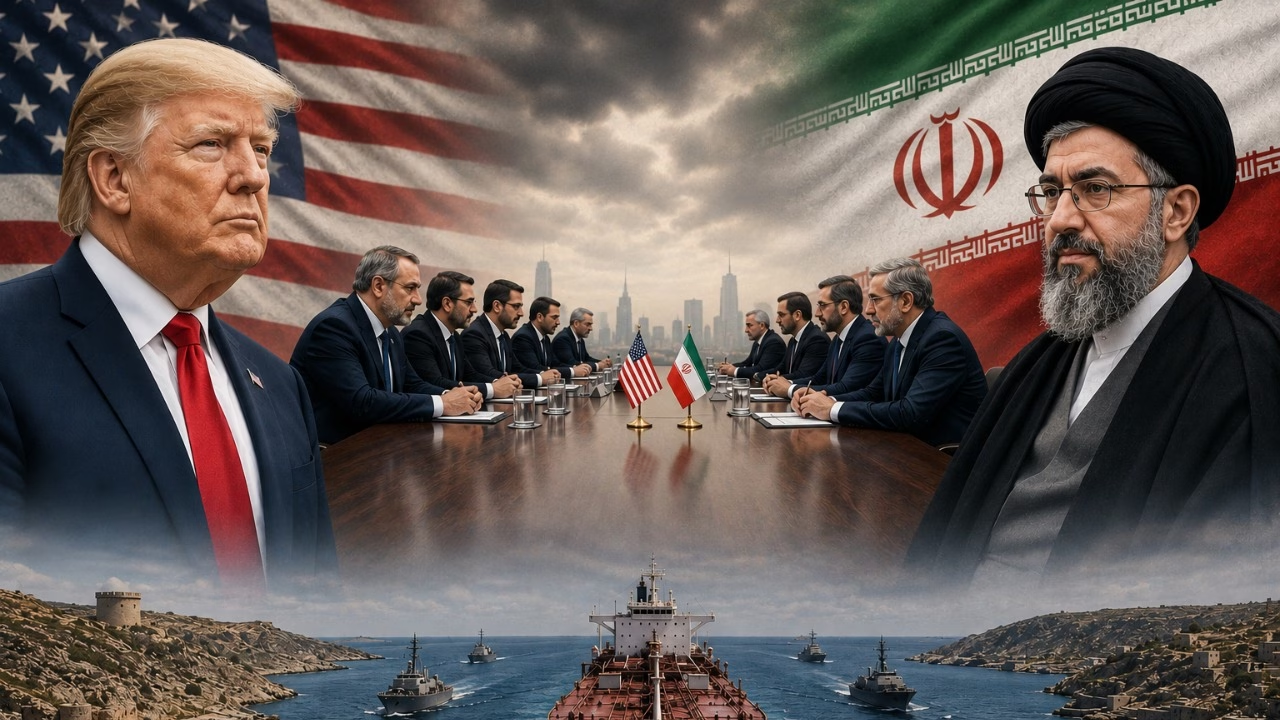
The Strait of Hormuz Gets Unlocked
The most immediate piece is the reopening of the Strait of Hormuz. Roughly 20% of the world’s oil once flowed through this narrow chokepoint. Iran seized control of it during the war, and the economic damage hit hard. Under the new agreement, Iran commits to making its “best efforts” to allow safe passage of commercial vessels between the Persian Gulf and the Sea of Oman. No tolls for the first 60 days.
Demining will take up to 30 days, but commercial ships start moving immediately. After that initial period, Iran enters negotiations with Oman to sort out long-term administration of the strait, consulting other Persian Gulf coastal states along the way.
US officials pushed back on fears that Iran could eventually start charging ships to pass through. Their argument: the Gulf states will never accept a toll arrangement, and their buy-in is essential to any permanent deal. Time will tell.
$300 Billion for Reconstruction — But Not From the US
The memorandum includes a commitment of at least $300 billion toward Iran’s reconstruction and economic development. That number raised eyebrows fast. Trump moved quickly to clarify at his G7 press conference: America is not writing that check.
What the agreement actually says is that Washington will work with “regional partners” to develop a reconstruction plan of that size. Officials broke down the mechanics simply if Iran complies with the final deal, the US lifts sanctions in a way that lets, say, the UAE build a power plant in Iran. Foreign investment flows in. American taxpayer dollars do not. The fund’s structure stays unresolved until the 60-day negotiation window closes.
Iran also gets other economic relief. The US immediately issues waivers letting Iran export crude oil, petroleum products, and related financial services. Iran’s frozen foreign assets also become available, though both sides still need to hammer out the release procedures.
No Nukes But the Hard Part Comes Later
Iran reaffirms in the agreement that it will not build or acquire nuclear weapons. That part is straightforward. Everything after it gets complicated fast.
Iran holds hundreds of pounds of uranium enriched to 60%. The administration calls this the floor of future nuclear talks, not the ceiling. Officials labeled Iran’s commitment here “a major, major win for the United States.” One analyst pushed back, describing Tehran’s move to keep the nuclear file separate from immediate ceasefire terms as “quite skillful” it hands Iran leverage going into the next phase.
Trump told reporters that cameras will cover every inch of the enrichment facilities in the meantime. “If they do anything, we’ll hit them with Patriots,” he said.
What the War Cost
The conflict started February 28 with joint US-Israeli strikes on Iran. It ran 111 days. At least 2,211 people died, including 14 American troops. The closed strait rattled global energy markets for months.
The interim agreement calls for an “immediate and permanent termination of military operations.” It starts a 60-day clock toward a more substantive final deal, which both sides can extend by mutual consent.
Lebanon, Israel, and What’s Still Unresolved
Lebanon appears three times in the agreement’s opening lines. The deal calls on Israel to end its war there as part of the broader ceasefire. It also affirms Lebanon’s territorial integrity. How that actually plays out with so many factions involved nobody knows yet.
Reactions split quickly. Macron called the deal “excellent.” Some American lawmakers disagreed sharply. At least one senator said the outcome was worse than the 2015 Obama nuclear agreement. Analysts at Syracuse University pointed out that the deal hands Iran significant economic relief while leaving major questions unanswered about what the past four months of fighting actually accomplished.
Trump framed it as the only realistic path forward. “If we didn’t do this deal, we could have dropped more bombs for another three weeks, two weeks, four weeks, two years,” he said. “And the strait would never have reopened.”
Whether the next 60 days produce a permanent deal or fall apart depends on trust. By most accounts, both sides are running very low on it.
