


Putin’s India Visit: A Test of Strategic Autonomy and Global Power Balance
A Historic Partnership in a Changing World
Russian President Vladimir Putin’s two-day visit to India marks a crucial moment for both nations as they navigate shifting geopolitical tides. During the visit, Putin will meet Prime Minister Narendra Modi and take part in the annual India-Russia summit, with major trade and defense agreements expected on the table. According to BCC News
India and Russia share a long-standing relationship rooted in the Soviet era. Despite global pressure and diplomatic turbulence since the Ukraine war, the partnership remains strong. Modi continues to pursue what New Delhi calls “strategic autonomy” — maintaining close ties with Moscow while also engaging the West. That balance has become increasingly difficult since the return of U.S. President Donald Trump, whose administration has imposed steep tariffs on Indian goods to counter India’s purchases of discounted Russian oil.
Energy and Defense: The Backbone of Cooperation
For Russia, India is an essential partner, and the numbers explain why. India is the world’s fastest-growing major economy, with a population nearing 1.5 billion and rapidly increasing energy demand. Before the invasion of Ukraine, Russian oil accounted for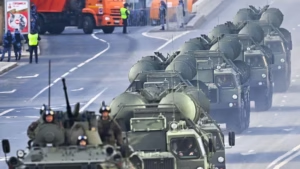 only 2.5% of India’s imports. That number soared to 35% after sanctions pushed Moscow to offer cheaper crude. Although U.S. pressure has now reduced those levels, Putin hopes India will keep Russian oil flowing into its market.
Defense cooperation is another critical pillar. Russia remains India’s biggest arms supplier, even as New Delhi tries to diversify and boost local production. India still relies heavily on Russian platforms — from Sukhoi fighter jets to the S-400 air defense system. With Pakistan acquiring new Chinese stealth aircraft, India is expected to explore advanced Russian technologies like the Su-57 fighter jet and S-500 missile system during this summit. Modi, however, will demand assurances of timely delivery as Russia struggles with wartime shortages.
Boosting Trade Beyond Oil and Arms
Trade remains a sticking point. The two-way trade volume has increased sharply to $68.7 billion — but heavily skewed toward Russian exports, mainly oil. Modi aims to expand the presence of Indian goods in the Russian market and reduce reliance on energy and arms deals. Areas like technology, manufacturing, pharmaceuticals, and skilled workforce exchange could help stabilize economic ties.
A Diplomatic Tightrope for Modi
Putin’s visit is more than diplomacy — it symbolizes Moscow’s effort to prove the West hasn’t isolated it. For Modi, it is a delicate balancing act between safeguarding national interests and preserving global partnerships. The outcomes of this visit will influence India’s strategic standing and shape Asia’s geopolitical future. Follow for more Fm News for more latest updates.
