


Genocide Allegations Raised at International Court
The Rohingya genocide ICJ hearing began on Monday as Gambia accused Myanmar of deliberately targeting the Rohingya minority for destruction. The Rohingya genocide ICJ hearing focuses on alleged violations of the 1948 Genocide Convention during the 2017 crackdown.
Gambia Details ‘Horrific Violence’ Against Rohingya
Gambia’s Justice Minister Dawda Jallow told the court that the case goes beyond technical legal arguments. He said Myanmar targeted “real people” in a calculated campaign of destruction against the Rohingya. According to Jallow, the community suffered some of the most brutal violence imaginable, including killings, arson, and sexual crimes.
Mass Exodus to Bangladesh After 2017 Crackdown
Hundreds of thousands of Rohingya Muslims fled Myanmar in 2017 to escape the army and allied Buddhist militias. Many crossed into neighbouring Bangladesh, carrying accounts of mass rape, murder, and villages burned to the ground. Today, around 1.17 million Rohingya live in overcrowded camps in Cox’s Bazar, spread across roughly 8,000 acres.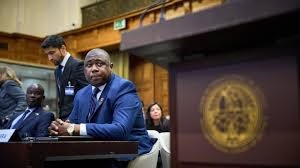
Survivors Seek Justice Through the ICJ
From the camps, Rohingya refugees continue to follow the hearings closely. Janifa Begum, a 37-year-old mother of two, said she hopes the court recognises the suffering her community endured. Refugees want justice, peace, and the chance to return home with dignity, though a final ruling could take years.
Myanmar’s Past Defence and Political Context
Myanmar has consistently denied genocide allegations, claiming its military action targeted insurgents after attacks on security forces. In 2019, Nobel laureate Aung San Suu Kyi personally defended the country at the ICJ, calling the accusations misleading. However, she has remained detained since the 2021 military coup and did not appear at the current hearings.
Earlier ICJ Orders and Global Scrutiny
In 2020, the ICJ ordered Myanmar to take all measures to prevent acts prohibited under the Genocide Convention, including killing and inflicting conditions meant to destroy the group. The United States formally recognised the violence as genocide in 2022, following a UN finding of genocidal intent.
Broader Legal Efforts for Accountability
The Rohingya case has drawn global attention, with experts watching its implications for other genocide claims, including those involving Israel and Gaza. Beyond the ICJ, investigations are also underway at the International Criminal Court and in Argentina under universal jurisdiction. Rohingya leaders say they have waited years for justice and hope these proceedings will finally deliver accountability. Follow for more latest updates, FM News.
