


How NATO Works as Trump Threatens to Seize Greenland
Trump’s Remarks Raise Tensions Inside NATO
The NATO Greenland crisis has brought fresh attention to how the alliance functions when internal tensions rise among its members. The NATO Greenland crisis intensified after US President Donald Trump repeated threats to seize Greenland, a territory linked to a NATO ally.
Greenland’s Strategic Importance
Greenland holds major strategic value due to its Arctic location and emerging sea routes. It also falls under the Danish realm, which places Denmark directly in the dispute. As a result, Danish Prime Minister Mette Frederiksen warned that an attack by one NATO ally on another would undermine the alliance itself.
How NATO Was Built
NATO was formed in 1949 when 12 nations joined forces to counter the Soviet Union during the Cold War. Since then, the alliance has expanded steadily. In 2024, Sweden became its 32nd member. Today, NATO identifies Russia and international terrorism as its main threats.
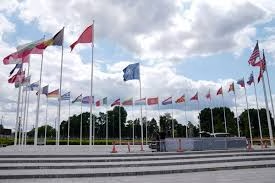
Consensus Drives NATO Decisions
NATO operates through consensus, which means every member holds veto power. Therefore, all major decisions require unanimous agreement. This structure ensures unity but also slows responses during crises. Notably, the alliance has blocked Ukraine’s membership bid due to internal disagreements.
Article 5 and Collective Defence
At the heart of NATO lies Article 5, which treats an attack on one ally as an attack on all. However, this guarantee only applies to threats from outside the alliance. Moreover, NATO activated Article 5 only once, after the September 11 attacks in 2001.
Why Article 5 Would Not Apply to Greenland
If the US and Denmark clashed, Article 5 would not apply. NATO lacks any mechanism to manage armed conflict between its own members. Instead, Denmark could invoke Article 4, which allows consultations. Still, Article 4 does not compel action.
Risk of Alliance Division
A US move against Greenland would almost certainly split NATO. Similar divisions emerged during the 2003 Iraq war. Then, some allies backed Washington, while others strongly opposed it. Consequently, experts remain unsure which nations would support Trump in this scenario.
US Dominance Inside NATO
The United States remains NATO’s strongest military power by far. It spends more on defence than all other allies combined. Therefore, NATO struggles to function without US leadership, assets, and troops.
How NATO Is Run Day to Day
Meanwhile, NATO’s political operations run from Brussels under Secretary-General Mark Rutte. He works to build consensus and maintain the US commitment. NATO’s military command operates from Mons, Belgium, under a US officer. Currently, Air Force Lt. Gen. Alexus Grynkewich holds that role. As tensions rise, NATO now faces one of its most serious internal tests. Follow for more latest updates, FM News.
